Photograph vs Snapshot

Welcome to our Canon RF Shooters Forum

Be apart of something great, join today!

SwampGrizz

Active Member
Joined
Oct 17, 2025
Posts
63
Likes Received
57
Points
18
Name
Dale Yawn
City/State
Savannah, Ga.
CC Welcome
  1. Yes
Hello All
First thing I want to say is that I have spent a good amount of time looking at the photographs on this site. They are stunning. Being the newbie that I am, I feel like I’m swimming around in the very deep end of the pool. Way over my head. There is some first class stuff on here.
Now to my point. I have been reviewing some of my pictures, and with a few lucky exceptions, they all look like the opportunistic snapshots that they are. Most all of the shots on here appear to me to have some sort of intention behind them. Don’t get me wrong, I enjoy the spontaneous act of stumbling up on interesting stuff, but that takes you only so far. I have looked at a blue million videos and articles about how to put soul and emotion and feeling and blah blah blah into your photographs, but I can’t get the hang of it. I didn’t really understand this until I saw a photograph that ORSONNEKE recently posted of a woman’s hands peeling potatoes. I responded to the thread that it took me back to when I was a child in my Aunt Minnie’s kitchen and remember the smells of the biscuits baking and the coffee brewing. That’s what a photograph should do.
How do I find that intentionality? I understand that this is a very subjective, loose, and open-ended question with no clear answer, but I would greatly appreciate knowing how you take photographs instead of snapshots. All advice, tips, and opinions welcome.
Swampgrizz
 
I'm no expert in this. Ask my wife because she does not care about anything past the shutter has but always had a far better eye for composition than I have. She's a natural and I had to try and learn.

You kind of answered it yourself. What story do you want your photograph to tell which is to me #1. Rules of thirds and leading lines which what you have already read about. Once you learn them also learn how to break them. What clutter is effecting your story telling? Which way is bird flying and leaving more space on that side is one example that I use. I try to work around those few things but like I said it is dos not come naturally to me.
 
Hello All
First thing I want to say is that I have spent a good amount of time looking at the photographs on this site. They are stunning. Being the newbie that I am, I feel like I’m swimming around in the very deep end of the pool. Way over my head. There is some first class stuff on here.
Now to my point. I have been reviewing some of my pictures, and with a few lucky exceptions, they all look like the opportunistic snapshots that they are. Most all of the shots on here appear to me to have some sort of intention behind them. Don’t get me wrong, I enjoy the spontaneous act of stumbling up on interesting stuff, but that takes you only so far. I have looked at a blue million videos and articles about how to put soul and emotion and feeling and blah blah blah into your photographs, but I can’t get the hang of it. I didn’t really understand this until I saw a photograph that ORSONNEKE recently posted of a woman’s hands peeling potatoes. I responded to the thread that it took me back to when I was a child in my Aunt Minnie’s kitchen and remember the smells of the biscuits baking and the coffee brewing. That’s what a photograph should do.
How do I find that intentionality? I understand that this is a very subjective, loose, and open-ended question with no clear answer, but I would greatly appreciate knowing how you take photographs instead of snapshots. All advice, tips, and opinions welcome.
Swampgrizz
I have the same problem - what constitutes a "good" photo? It all comes down to composition, but it's more than the rule of thirds or leaving ample room in the photo for the occupants to "breathe" (though that is fundamental and important). It takes the artist eye, something that I do not possess but strive for, to know that the hands peeling a potato tells a story. It seems obvious when stated, but it's not that obvious when viewing the scene. Would hands opening a beer bottle evoke the same sentiment? I doubt it. Looking at someone's work and seeing the artistry sometimes makes me envious as the composition seems sooo complete, and I hope to learn from that. Like Only RF, my wife is a natural and I'm generally in awe of what she "sees".

Sadly, I don't have an answer short of learning from better works than my own.
 
I’m kind of glad that I’m not alone in this. Here’s what jumps out at me from both your comments: Composition is indeed fundamental and important, as is learning the rules so that you can learn to break them. The “artists eye” is much more difficult for me. Apparently some people have it, and some don’t. My hope is that, over time and with experience, I can develop my “eye”. The lines about hands peeling potatoes and hands opening a beer bottle having the same emotional effect is the question in a nutshell. I am at the point now where I want to worry less about the technical aspects (gear, settings, etc.), and actually look to find something that evokes a response. I need to learn to see the story.
I thank you both for taking the time to respond. Your help is greatly appreciated.
 
My wife also has a much better eye than I do. She always spots something cool, and tells me to take a picture of it. I tell her that you have a phone, dammit, you take the picture. I wind up taking the picture.
 
I'm in the same boat. Please pass me a life preserver....

I've been taking 'snapshots' most of my life. We all do. I'm not sure any of my pictures have or will ever tell a story - but I'm OK with that. Most of my photography is of critters, landscapes or interesting objects. Very rarely people since I am quite introverted. A smartass, to be sure, but an introverted one.

For me, I have learned a few basic, common-sense truths...

You can't take a picture, much less one that tells a story, if you don't have your camera. So, I've begun to take a camera with me whenever I step out of the house. To the store, on a walk, to a museum and whenever practical.

Also important is knowing when NOT to take a picture. I've learned not to even attempt a 'bird-in-flight' shot in poor light or sharp transitions of light. And other such situations.

I try very hard to be aware of light. Where is it and can I use it to my advantage? Will it be better later on? Should I come back to a spot during sunrise or sunset? Reconnaissance can be very helpful in planning. Lighting, like focus, can have a huge impact on the 'mood' of a particular shot.

Here's one last bit of advice I try to follow.

I'm not sure how much of any this helps, but that's kinda where I'm at.

Cheers!
 
THXGEEK,
Welcome to the boat. There’s plenty of room. Thanks for the link as well.

I don’t mean to give the wrong impression here. I enjoy wandering around taking pictures of interesting stuff. My cup of tea is textures, architecture, sunrise/sunset, and street. I’m not set up to photograph critters and birds (no real zoom lenses), and I probably don’t have the patience to get really good at it. I do, however, enjoy looking at and admiring the photos of animals/birds/landscapes that you and others post. There is some great stuff here.
It occurs to me as I think about it and consider the responses so far, that my question is a real squishy philosophical one with no hard and fast answer. What provokes a response in me doesn’t necessarily provoke a response in someone else, and if it does, then it may be completely different than my response. My best course of action, I think, is to keep looking for moments and scenes that tell a story or strike a response, and in the meantime just have fun shooting snapshots of interesting stuff. I think I’m trying to impose a practical solution on an emotional situation. Lead with my heart instead of my head. Maybe I need to get my head out of my butt and stop overthinking things.
Thanks for responding.
SwampGrizz
 
Hmm, there are so many sides to this.

When I started out in photography, I thought photography was about landscapes. So I drove around looking for beautiful scenes. They didn't happen very often. I lived in a boring place. Vacations opened my eyes (seemingly), and sometimes I found compelling situations on my trips that made good photos.

It's quite likely that people living in those far away places would find great scenes where I live that I wasn't able to see.

As the years went by, my choice of subject matter gradually changed. More and more I found myself shooting nature subjects, like birds and bugs. And that became a favorite genre for me.

Does that happen to other photogs too? I don't know, but maybe it does. It takes a lot of time and experience to find out what kind of photos you like to shoot. In time if that happens, you might get pretty good at your chosen area too.

There are two kinds of photogs: 1) record photogs, and 2) artsy photogs. Most photogs are the first kind, the record photogs. They take photos to record something. They do portraits, landscapes, birds, photojournalism, sports. Their photos show what was there. Record photogs can become very skilled photographers and make some excellent images.

The second kind is artistic. They see what we don't easily see. The subject matter isn't important - it's about color and shapes and emotion. These people can find amazing images anywhere.

So think about what kind of photog you are - most likely it's the first kind. But free the mind to admit some artistic interpretation when possible.

Also think about who you are shooting for. Photography is communication. Some say they don't care what others think about their pics. They shoot to please themselves. But it is communication. Are you just shooting for yourself but still post to forums? Then think about what you are communicating. You might feel you captured an emotion or mood... but can others see that in your pic? If not, try to figure out how to accomplish that.

Photography is a great journey and you never stop learning.
 
I don't know if this is allowed here, but a while ago I wrote a piece about composition on another forum. If this is frowned upon here, I'll understand if it gets taken down.

 
ShipleyNW,
Great article!!!
This is what I was referring to earlier about intentionality. You actually thought about your farmhouse shot before you hit the button. Well done! You communicated (at least to me) a kind of wistfulness, a throwback to a simpler time. That's the story I got from it.

Archibald,
I think you're right about the two types of photographers. I'm definitely in the recording camp, and when luck shines my way, I wind up with an "art" photo. My goal is to get to the point where I can see it. As you said, "They see what we don't easily see".

As I said in my original post, I'm swimming in the deep end here. I need to get back in the kiddie pool where I belong. There are some real heavyweights here.

Thanks again for the responses and commentary.
 
What is wrong with buying your first real camera, wandering round, taking snapshots ?

The question really is who are you taking them for, or who are you trying to impress - yourself, or your wife, or your family, or the community on here ?

Don't knock yourself out trying to match the stuff on here taken by professionals with 30 years experience, and equipment that is 5x the cost of yours.

If I see some handmade furniture in a shop, I can go home and get my basic tools out of the garage but can't replicate it. I don't have the experience, of the knowhow, or the knack - some people are good with their hands and some are not. Its the same with artistic photography, if that is what you aspire to.

I'm a relative newbie, got my first "proper" camera at the end of 2024, and have done some of the research you have done - rule of 3rds, leading lines, diagonals, golden ratio, whatever. What is good composition ? I actually prefer the lone tree in the middle of the frame, rather than off to the left or right - thats me, my idea of a pleasing picture.

Best advice for a newbie is go out (or in, if thats your preference), and shoot loads of stuff, doesn't really matter if its good or bad at this point. Go home, get the laptop out, and see what you have got.

Don't like the big landscape, then try cropping down to just one tree and a swan on the lake. Don't like the picture of hands washing up, maybe do it again later and take the whole kitchen, and what is outside the window.

What pleases your eye - that is your idea of good composition.

Remember, beauty is in the eye of the beholder, take pictures for you.
 
What is wrong with buying your first real camera, wandering round, taking snapshots ?

The question really is who are you taking them for, or who are you trying to impress - yourself, or your wife, or your family, or the community on here ?

Don't knock yourself out trying to match the stuff on here taken by professionals with 30 years experience, and equipment that is 5x the cost of yours.

If I see some handmade furniture in a shop, I can go home and get my basic tools out of the garage but can't replicate it. I don't have the experience, of the knowhow, or the knack - some people are good with their hands and some are not. Its the same with artistic photography, if that is what you aspire to.

I'm a relative newbie, got my first "proper" camera at the end of 2024, and have done some of the research you have done - rule of 3rds, leading lines, diagonals, golden ratio, whatever. What is good composition ? I actually prefer the lone tree in the middle of the frame, rather than off to the left or right - thats me, my idea of a pleasing picture.

Best advice for a newbie is go out (or in, if thats your preference), and shoot loads of stuff, doesn't really matter if its good or bad at this point. Go home, get the laptop out, and see what you have got.

Don't like the big landscape, then try cropping down to just one tree and a swan on the lake. Don't like the picture of hands washing up, maybe do it again later and take the whole kitchen, and what is outside the window.

What pleases your eye - that is your idea of good composition.

Remember, beauty is in the eye of the beholder, take pictures for you.
Nothing wrong with a lone tree in the centre. Learn the rules and then learn how to break them.
 
Hi Dale,

As an enthusiastic hobbyist, I always hesitate to offer advice to others (but you did ask!).

In common with some of the other contributors, I major on the set up/ tech side, while Karen has ‘the eye’ - I never cease to benefit from watching her and wondering how she makes it look so simple to capture absolutely amazing images.

While we take our fair share of ‘snaps/ memory’ shots, we're constantly looking for opportunities to make creative images that we will find different/ interesting/ pleasing. In addition, I am always thinking ‘how could I process this file creatively?’. Basically put, we produce images we like to look at.

Our approach is that generally, people see the world from head height, enjoying an expansive in focus view, all nicely exposed, in colour etc… so, when try to get ‘creative’ we’ll start thinking about how we can use our cameras see things differently (e.g. height/ distance/ angle to subject, depth of focus, considering shadows and light ‘Chiaroscuro’).

It’s hard for me to put into words, so - by way of example - when we visit zoos, we take load of snaps/ memories, but also look for different stuff…

RF-S-EGS.jpg
  • Join to view EXIF data.


Make of this what you will - happy shooting… :)

Phil
 
Last edited:
We watch our news show and they have a few pictures of the day submitted by people. I'd say 70-80% of the shots that make it are off level. Some pretty badly. We both say level when we see them. I often say does any out there own a level? :) Also some times there is lots of clutter that does not add to the image. Sure lots of extra stuff can contribute if well composed however since this is subjective clutter to one may be gold to another.
 
"There are no rules for good photographs, there are only good photographs" - Ansel Adams. Ha ha, Ansel was wrong. There are hundreds of composition rules in photography. There are even rules about the rules, as in "Break the rules when necessary".

Obviously we love rules. The most famous is the rule of thirds which gets repeated again and again.

I have a certain contempt for rules, because an artist should not be constrained by edicts. Yet the rules can't be dismissed entirely. When a beginner presents an image that clearly doesn't work, we might make suggestions, and inevitably get into those rules.

The word "rule" has more than one meaning. The rules of composition are not rules as in a game of chess. They are rules of thumb, suggestions that often work. We can think of them as styles of others that we can adopt if we want. That implies we need some understanding of when to apply them.

To me, the strongest part of an image is the center. Put the subject in the center, if it is a strong subject, and if it works. There needs to be a reason. Most nature photos (as traditionally defined by PSA and FIAP) benefit from this. Otherwise put the subject off-center. It doesn't need to be at the thirds. The image needs to achieve visual balance - usually. That is more imporant than following a formula. Many times you can create special feelings by placing main subjects close to the border. That can be very effective.

Lately I'm hearing a lot about portraits needing to look to the right. They say it's because we read from left to right, therefore we view an image from left to right. But that is unproven. The way we view images is way more complicated. And even if we do scan an image from left to right, why would it be best for the portrait to face to the right? It would be better to face to the left as the eye would encounter the face first. But I think this is false logic. The direction doesn't matter - unless you think it matters! (Check out famous portraits like the Mona Lisa and Girl with a Pearl Earring.)


In my experience, photographers love rules and often cite them, but when creating images generally pay little attention to them. They go by feelings and what looks right. And that's how it should be.
 
I don't know if I agree that Ansel Adams was wrong, but I do wonder about many of these "rules" that seem to fit only after the photo is taken. I can't believe that anyone, and I do mean ANYONE, looks at a scene and says "that the golden rule" or "the angles here match the Fibonacci sequence". I do think that someone with an artistic eye just knows that the scene looks "right", and it just happens to fit one of those rules. I look at a subject (scene, animal, building, etc.) and feel drawn to it for reason's I cannot explain. My wife, with the artistic eye, has told me that I just need to figure out what the draw was. Look more closely, change the angle of view, zoom in or out, b&w or color - I think that we just need to slow down and critically survey the scene for that thing that drew us to it in the first place.

A pro once told me that you can't make a good photo without a good subject, and I think that is what we artistically challenged need to consider. Maybe, buried within the less that exciting scene we are drawn to there lies a nugget of art that just needs to be coaxed out. Or, perhaps it's just a boring scene.
 
I don't know if I agree that Ansel Adams was wrong, but I do wonder about many of these "rules" that seem to fit only after the photo is taken. I can't believe that anyone, and I do mean ANYONE, looks at a scene and says "that the golden rule" or "the angles here match the Fibonacci sequence". I do think that someone with an artistic eye just knows that the scene looks "right", and it just happens to fit one of those rules. I look at a subject (scene, animal, building, etc.) and feel drawn to it for reason's I cannot explain. My wife, with the artistic eye, has told me that I just need to figure out what the draw was. Look more closely, change the angle of view, zoom in or out, b&w or color - I think that we just need to slow down and critically survey the scene for that thing that drew us to it in the first place.

A pro once told me that you can't make a good photo without a good subject, and I think that is what we artistically challenged need to consider. Maybe, buried within the less that exciting scene we are drawn to there lies a nugget of art that just needs to be coaxed out. Or, perhaps it's just a boring scene.
Yep, I agree with you. Some folks discuss framing as though there are silver bullets that will give success. That smacks of numerology. It is better to just change the crop until you like it. Trust your eye.

A photog bigshot and photo judge here told us more than once to make square photos. He said square is unusual, and judges notice that. They like things that are different. Well, IMO that is an odd way to evaluate an image, but at least it gets us away from the Golden Rectangle. :)
 
This type of discussion is exactly what I was hoping for when I joined the site a little while back. I have gotten more out this one discussion than a whole bunch of the YouTube videos I watched. I am lucky to be the beneficiary of all the collective wisdom here. Thanks to everyone for contributing.

I have enjoyed taking my snapshots, and am proud of them. I took them for my own enjoyment, and have been pleased to share them with anyone that may be interested. I am literally learning something new every day, and this old dog has found some new tricks here. I am a 70 year old retired Land Surveyor, and one of the joys of my day is to get outside and take pictures instead of getting outside to go work. Life is good.

I am learning composition, and trying to apply it to my photography. My goal is to move toward putting life and emotion in my photos, as well as snapping pictures of stuff that catches my eye. (I won’t give that up-too much fun) I am going to keep looking for the moments that say something, and hopefully convey that moment to who ever looks at my photo. Wish me luck.
 
This type of discussion is exactly what I was hoping for when I joined the site a little while back. I have gotten more out this one discussion than a whole bunch of the YouTube videos I watched. I am lucky to be the beneficiary of all the collective wisdom here. Thanks to everyone for contributing.

I have enjoyed taking my snapshots, and am proud of them. I took them for my own enjoyment, and have been pleased to share them with anyone that may be interested. I am literally learning something new every day, and this old dog has found some new tricks here. I am a 70 year old retired Land Surveyor, and one of the joys of my day is to get outside and take pictures instead of getting outside to go work. Life is good.

I am learning composition, and trying to apply it to my photography. My goal is to move toward putting life and emotion in my photos, as well as snapping pictures of stuff that catches my eye. (I won’t give that up-too much fun) I am going to keep looking for the moments that say something, and hopefully convey that moment to who ever looks at my photo. Wish me luck.
It is a fun thread for sure. Thanks for your comment.

You call yourself a newbie but your photography is great. You have an eye for patterns and textures. Keep it up. We can all learn from each other here.
 
Let's keep this conversation going and don't let the thread die. I have learned something here, and I appreciate everyone's candor. There is always something new to learn.
 
Sounds good to me.

One of the many things I have learned here is that when you try to define art, it's like trying to nail Jello to a wall. It's many things to many people. The best I can hope for is to recognize it when I see it, and if I'm lucky, to capture it in a photograph. I guess that's the trick - to use all of the techniques, rules of thumb, compositional tools, etc., to capture that fleeting moment when it occurs.

When I got my first real camera, I was walking down the street and snapped a pic of a storm sewer grate because it had a cool pattern and texture to it. At the time, I was thinking to myself that, man, this is art. They're going to hang this in the Louvre. I've since learned that probably won't happen. To go back to ORSONNEKE's photograph in my original post of the lady's hands peeling potatoes and the effect it had on me, there is a big difference between his photograph and my picture of a sewer grate. I look at his photo, and I remember pleasant things, and when I look at my sewer grate, it's still just a sewer grate. Doesn't metaphorically transport me anywhere.

I've attached my fabulous work of art for all of you to admire. Anybody got any connections to the Louvre, let me know. /s

IMG_0055.jpg
  • Join to view EXIF data.
 
Archibald,
Some times it doesn’t work out, does it? At least yours has some color to it.
 
Gents, don't give-up the creative process. You may not be able to revisit these locations, but in each case you saw something that caught your artistic eye. Try cropping the image, twist them so that the current horizontals become diagonals, or flip the image upside-down, or try removing the color. Clearly, most of our photos are not award winners, but there might be something "hidden" that emotes the feeling you had when camera was in hand.
 
Sounds good to me.

One of the many things I have learned here is that when you try to define art, it's like trying to nail Jello to a wall. It's many things to many people. The best I can hope for is to recognize it when I see it, and if I'm lucky, to capture it in a photograph. I guess that's the trick - to use all of the techniques, rules of thumb, compositional tools, etc., to capture that fleeting moment when it occurs.

When I got my first real camera, I was walking down the street and snapped a pic of a storm sewer grate because it had a cool pattern and texture to it. At the time, I was thinking to myself that, man, this is art. They're going to hang this in the Louvre. I've since learned that probably won't happen. To go back to ORSONNEKE's photograph in my original post of the lady's hands peeling potatoes and the effect it had on me, there is a big difference between his photograph and my picture of a sewer grate. I look at his photo, and I remember pleasant things, and when I look at my sewer grate, it's still just a sewer grate. Doesn't metaphorically transport me anywhere.

I've attached my fabulous work of art for all of you to admire. Anybody got any connections to the Louvre, let me know. /s

View attachment 42887
Hi Dale,

You should open this up for re-edits and see what people come up with - not saying the Louvre would come calling, but you never know…

(Having said that, my free time for the coming week has already disintegrated, so I’m not sure if/ when I’d be able to have a play).

Phil
 
Right, time for me to chip in. (Puffs on briar pipe, strokes imaginary beard).

First of all: I don't draw a distinction between an intentional photograph and a snapshot, beyond the obvious one of the degree of preparation and set-up. It's a continuum between the creation of an image that relies on being in the right place at the right time - news photography, perhaps - and creating the right time and place, as in a studio. But even in a studio setting, there is an element of chance: getting that "look" from the model, the enigmatic smile, the exact position of the body, and so on. Even a still life can incorporate chance - the way the light falls through a window, or the exact position of the fill light.

Second: technique isn't everything, but pressing the shutter is. I learnt my image making back in the days of film, when TTL (through the lens) metering was considered a novelty. Film was expensive, and so it was natural to try and make sure that every shot counted, but what transformed my approach was firing off lots of shots. A photographer who influenced the young me (Brian Shuel - he has many pix in the National Portrait Gallery) made the obvious point about time and place: you only get one go at it, so give yourself the best chance of getting a great photograph. Digital photography removes the cost disincentive, which is good, but brings it's own issues - as when you're trying to find keepers out of thousands of images from one shoot.

Third: mistakes are the lifeblood of image making. This is not just because you learn from your mistakes, but because sometimes the mistake is itself the best image. This might be a bit of motion blur bringing a subject to life, or an unnoticed symmetry (or lack of) in a scene.

The key to all this, of course, is being able to recognise when you have a good image. As a writer, I firmly believe that you can only write good books if you read great ones. With photography, it's easier. There is so much great photography around, and the act of seeing is a lot less time-intensive than reading Pynchon ;-) . Take some time to look back at the work of the greats: Cartier-Bresson, Ansell Adams, or Elliot Erwitt. Look at the pictures people post here. If there are images that really work *for you*, ask how the photographer got the image. With time and a bit of study, you will develop an eye for a good image. It's a cliche, I know, but once you know what you like, you can begin to find images everywhere.

Some things that help me: the afore-mentioned Brian Shuel took great pride in never cropping his images. He composed in camera, and printed with the edges of the frame showing as a black border to underline his approach. I try to do that as much as possible, whether I'm shooting with the big camera or my iPhone. It's a useful discipline: not point and shoot, but point, think, adjust and shoot. It soon becomes second nature, and it will elevate snaps into something a bit more intentional.

I love my big camera. I love the images I get with my expensive lenses. I love what it lets me do. But I take more photos with my iPhone. It's with me all the time. When I see something, I can capture it immediately. Obviously it has limitations, but working with those limitations is a very useful discipline, and it feeds back into my photography whatever gear I'm using. I might do a separate post on that, but don't hold your breath. It won't happen quickly. Nothing does these days...

Finally, think in terms of projects, whether that's documenting an event or process or family, or themes. I don't do enough of that. And I struggle with finding a "signature look". I plan to work on that this year, informed by what I've been doing in phone photography.

Photography, like most things, is a journey with many stops. Just don't get off, or worry about delays.
 
I don't know if I agree that Ansel Adams was wrong, but I do wonder about many of these "rules" that seem to fit only after the photo is taken. I can't believe that anyone, and I do mean ANYONE, looks at a scene and says "that the golden rule" or "the angles here match the Fibonacci sequence". I do think that someone with an artistic eye just knows that the scene looks "right", and it just happens to fit one of those rules. I look at a subject (scene, animal, building, etc.) and feel drawn to it for reason's I cannot explain. My wife, with the artistic eye, has told me that I just need to figure out what the draw was. Look more closely, change the angle of view, zoom in or out, b&w or color - I think that we just need to slow down and critically survey the scene for that thing that drew us to it in the first place.

A pro once told me that you can't make a good photo without a good subject, and I think that is what we artistically challenged need to consider. Maybe, buried within the less that exciting scene we are drawn to there lies a nugget of art that just needs to be coaxed out. Or, perhaps it's just a boring scene.
Ansel was never wrong :p:D
 
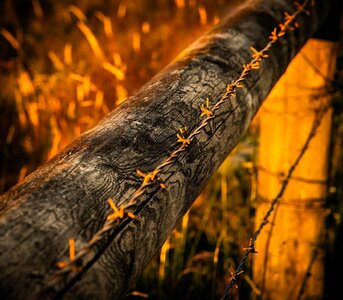
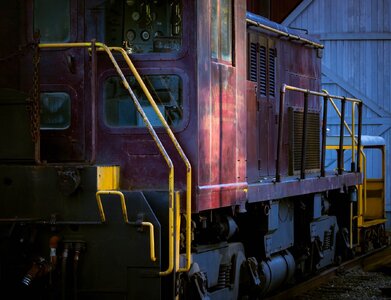
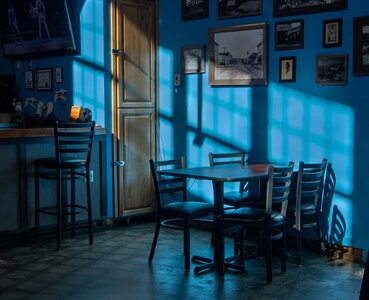
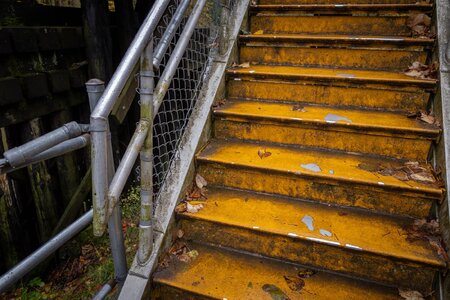
Here's a quick exercise. When you're out wandering aimlessly, looking for interesting things to shoot, forget about the things and look for interesting light instead. When you find some good light, only then go in search of something to put in front of that light. Not only do you get more interesting images that way, but it trains you to look at the light which, after all, is our medium.

LE_14-4065.jpg
  • Join to view EXIF data.

LE_14-2985.jpg
  • Join to view EXIF data.

LE_14-4985.jpg
  • Join to view EXIF data.

LE_14-7345.jpg
  • Join to view EXIF data.

LE_14-2544.jpg
  • Join to view EXIF data.

LE_14-4853.jpg
  • Join to view EXIF data.
 

Latest reviews

  • Canon EOS R6
    5.00 star(s)
    A nice camera specially if you want to save some money
    I bought the Canon R6 in 2024 to replace my Canon R7. After researching the market, I decided to go with the R6 instead of the R6 Mark II. Why not...
    • ctitanic
  • Prime Canon RF 50mm F1.2L USM
    5.00 star(s)
    Long Story Short Review
    10 years ago.....yes I said it was a long story! Canon sent me an EF 50mm f1.2 for a lens evaluation. On my 5D Mark III it was rather amazing. A...
    • GaryM
  • Zoom Canon RF 70-200mm F2.8L IS USM
    5.00 star(s)
    Fast, sharp, and lightweight! A great lens
    This is my main workhorse of a lens and I love it. It's very light weight (only around 2.3 lbs) lens. I've been able to hand-hold it for an event...
    • Crysania

New in the marketplace

Back
Top